
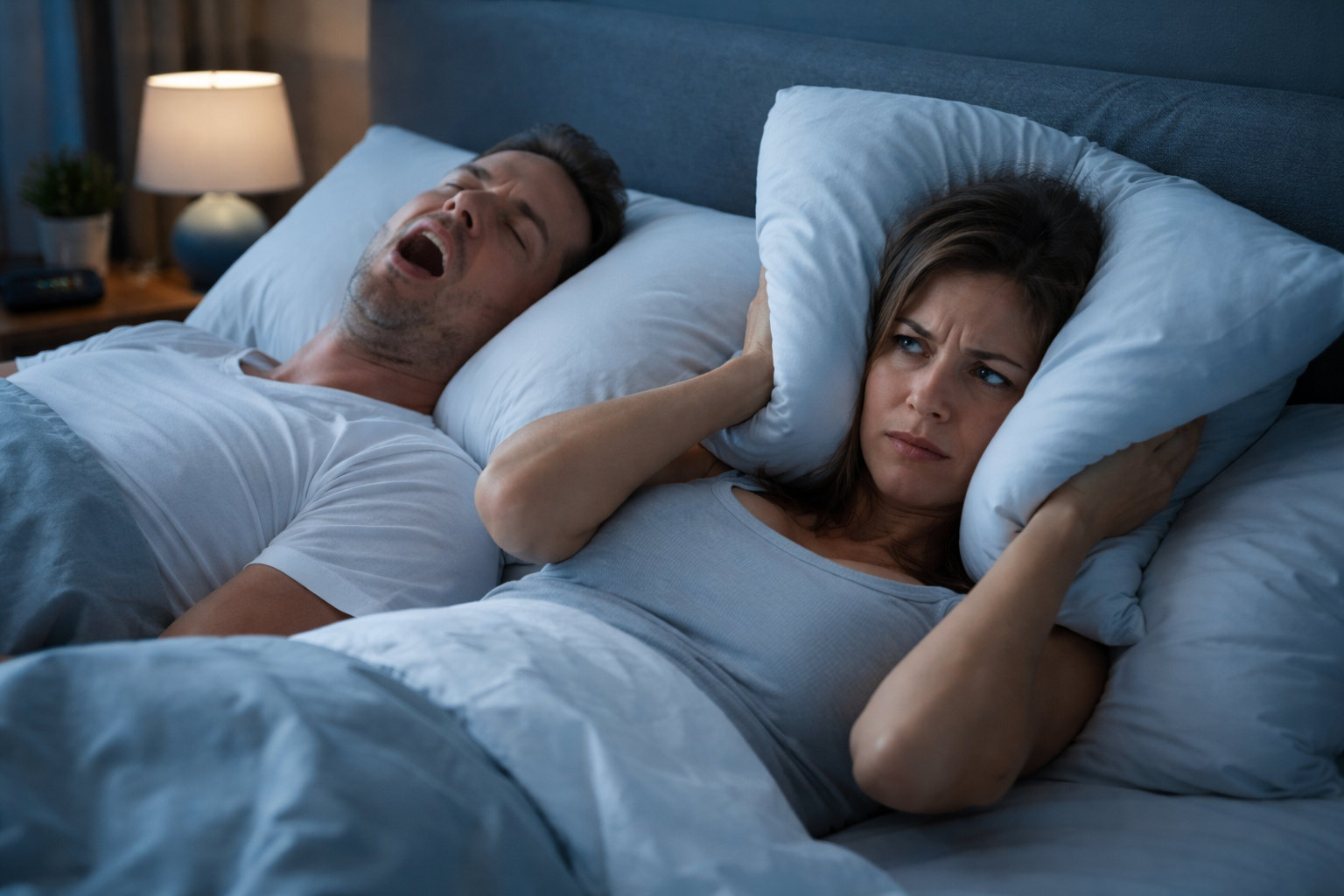

If you’ve been asking yourself what causes snoring to get worse with age, you’re not imagining it. A lot of people who barely snored in their 20s or 30s notice it creeping in later—then getting louder, more frequent, and harder to ignore. The good news is that worsening snoring usually has clear reasons behind it, and many of the most helpful options are non-invasive.
Below is a practical, plain-English breakdown of what causes snoring to get worse with age, why it happens, and which approaches can actually move the needle.
The problem: snoring that slowly ramps up over the years
Snoring isn’t just “noise.” It’s typically a sign that airflow is getting turbulent somewhere between your nose, throat, and airway. Over time, small changes in anatomy, sleep patterns, and health can stack up—until snoring becomes the new normal.
And for some people, snoring can overlap with sleep-disordered breathing (including sleep apnea). That’s one reason it’s worth taking seriously, especially if you also notice morning headaches, daytime fatigue, dry mouth, or irritability.
Why snoring often worsens with age
1) Throat and airway tissues lose tone
As we age, muscle tone naturally declines. That includes the muscles that help keep your upper airway more stable during sleep. When those tissues relax, they’re more likely to vibrate as air moves through—aka snoring.
2) Your sleep gets lighter and more fragmented
Sleep architecture changes with age. Many people spend less time in deep sleep and wake up more often. That can mean more time in the “lighter” phases where snoring tends to show up, plus more time on your back (a common snoring position).
3) Nasal congestion becomes more common
Allergies, chronic sinus issues, or structural narrowing can make nasal breathing tougher. When you can’t breathe comfortably through your nose, you’re more likely to mouth-breathe—raising the odds of snoring.
4) Weight shifts and body composition changes
Even modest weight gain can increase tissue around the neck and throat. That can narrow airflow and make snoring louder. It’s not about “a number on the scale”—it’s about airway space and how easily air can pass.
5) Jaw position and dental changes can affect the airway
Over time, changes in bite, tooth wear, clenching/grinding, or jaw posture can influence tongue position and airway openness. If the tongue falls back during sleep, airflow gets tighter—snoring gets worse.
6) Alcohol, medications, and evening routines matter more
Alcohol close to bedtime relaxes airway muscles. Some medications can do the same. As the airway becomes a bit more sensitive to relaxation with age, these factors can have a bigger effect than they used to.
7) Sleep apnea risk increases with age
Not everyone who snores has sleep apnea, but risk does rise with age. If snoring is paired with gasping, witnessed pauses in breathing, high blood pressure, or persistent fatigue, it’s smart to get assessed rather than guessing.
Non-invasive approaches that can help (broad and inclusive)
Here are common, non-surgical strategies that many people try first—often with good results:
- Side-sleeping support (pillows, positional training, or a backpack-style device)
- Nasal breathing support (saline rinses, humidity, allergy care, nasal strips if helpful)
- Myofunctional-style exercises (tongue and airway muscle training)
- Reducing alcohol close to bedtime and reviewing sedating medications with your clinician
- Weight management support (even small changes can improve airflow for some people)
- Sleep hygiene upgrades (consistent schedule, screen light reduction, cool room, etc.)
- Oral appliance options that guide jaw/tongue position during sleep
- Objective testing to rule in/out sleep apnea and pinpoint what’s driving the snoring
If you’ve tried a few of these and the snoring keeps progressing, it usually means it’s time to look at airway structure and breathing patterns more directly.
What we offer at Natural Health Essentials for airway-focused support
If you’re still wondering what causes snoring to get worse with age in your specific case, a targeted airway evaluation can save a lot of trial-and-error.
At Natural Health Essentials, we offer airway-related services designed to get clearer answers and support non-invasive solutions:
Airway evaluation tools and diagnostics
- Consultation (scheduled appointment only) to review symptoms, sleep history, and goals
- Sleep study options to assess whether sleep apnea or other sleep-disordered breathing may be involved
- CBCT scan (3D imaging) to better understand airway space and structural contributors
Non-invasive device support (when appropriate)
Some people benefit from devices designed to support airway development and oral posture, such as:
- Airway Expander
- Myobrace device
- Vivos device
These options aren’t “one-size-fits-all.” The right plan depends on anatomy, breathing patterns, and what your testing shows.
Supportive wellness services (helpful for the bigger picture)
Snoring and poor sleep often connect with stress load, inflammation, and recovery. Many clients also want support in areas like resilience and energy. We offer wellness services such as nutritional IV support and recovery-focused care—often as part of a broader plan to help you feel better day to day (especially when sleep quality has been off for a while).
When snoring is worth checking sooner rather than later
Consider getting assessed if snoring comes with any of these:
- Waking up tired even after a full night in bed
- Morning headaches or dry mouth
- Grinding/clenching
- Mood changes or trouble focusing
- Witnessed pauses in breathing, choking, or gasping
- High blood pressure concerns
You don’t need to “wait until it’s severe” to get useful answers.
A simple next step
If your snoring has changed over the years and you’re trying to understand what causes snoring to get worse with age, we can help you map out a practical, non-invasive path forward.
Call to schedule your free consultation (appointment only): (727) 476-6339. Please don’t come in without an appointment—our visits are scheduled so we can give you dedicated time.
Natural Health Essentials
1825 Sunset Point Rd., Suite #2, Clearwater, FL 33765