

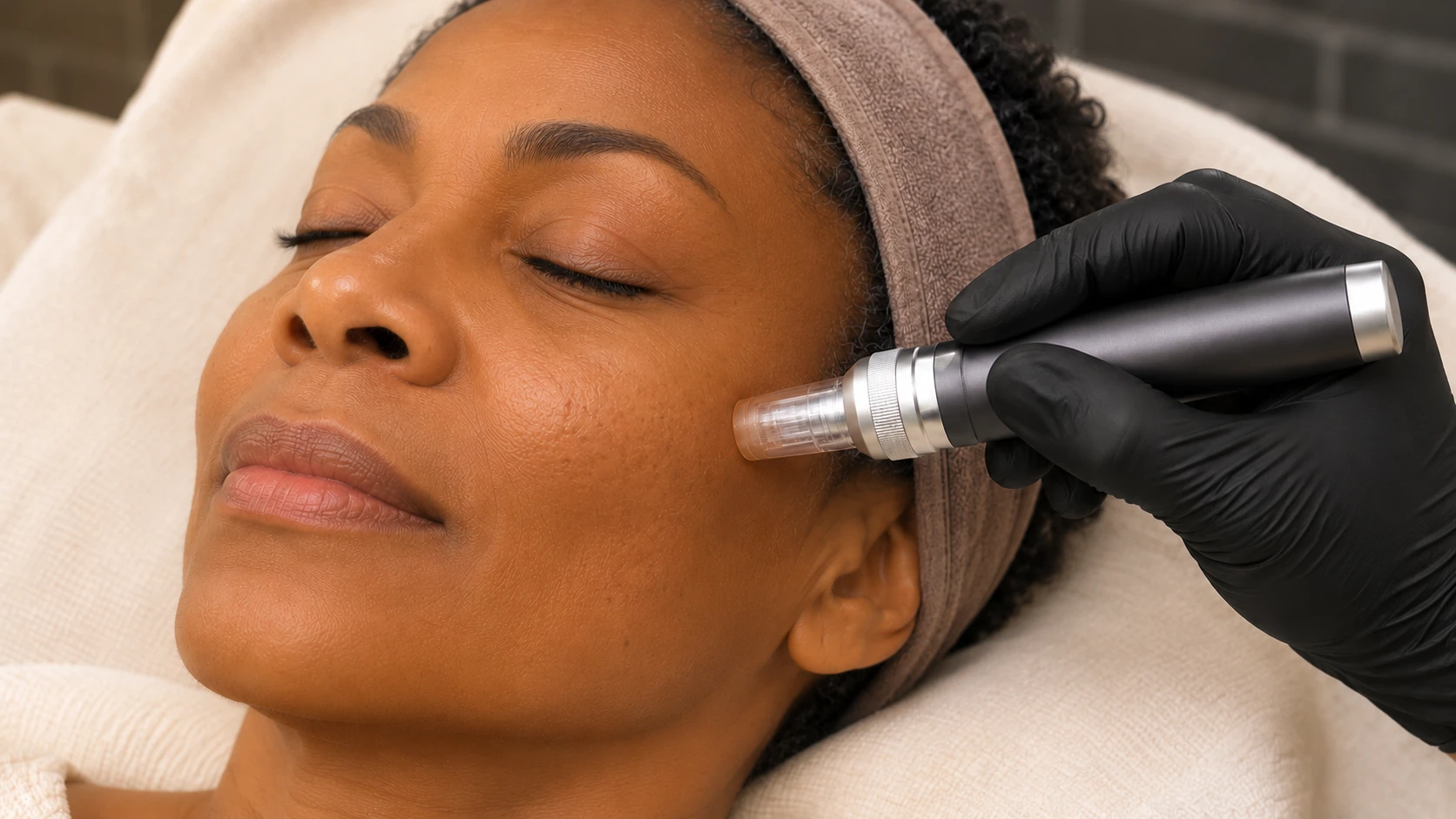

Yes, you can combine microneedling with platelet-rich plasma (PRP) in the same visit. The pairing is most worth discussing if your goal is to soften shallow, indented acne scars. Some small studies suggest that adding PRP may improve the appearance of these scars more than microneedling alone, but the extra benefit varies. If your main concern is a flat dark mark, active acne, or dry skin, a different approach may make more sense.
What Does PRP Add?
Microneedling uses fine needles to make tiny, controlled punctures in the skin. As the skin repairs itself, it gradually remodels collagen. Over time, that process can help soften the look of some acne scars and uneven texture.
PRP starts with a small blood draw. Your provider spins the sample in a centrifuge to concentrate the platelets in part of the plasma. Platelets release growth factors involved in the body’s repair process, which is the reason providers sometimes add PRP to a microneedling session. Microneedling itself can improve certain scars, so the question is how much PRP might add for your particular skin concern.
Is It a Scar or a Mark?
Acne can leave behind both a change in color and a change in texture. A flat brown or red mark may linger after a breakout, but the skin surface stays level. An indented scar changes the contour of the skin. If a spot casts a small shadow in side lighting, texture may be part of what you’re seeing.
That distinction matters when choosing a treatment. Shallow depressions may respond to microneedling. Deep, narrow scars or scars pulled down by tissue underneath may need a different procedure. If you’re still breaking out, getting the acne under control comes first so new scars are less likely to form.

What Happens at the Visit?
At Natural Health Essentials in Clearwater, microneedling with PRP is one of several collagen induction options. If you and your provider choose the combination, the visit includes a blood draw to prepare the PRP. Your provider cleanses the treatment area, may apply a topical numbing cream, and uses a fresh, single-use needle cartridge for microneedling.
Your provider should explain how PRP will be used and what risks apply. The FDA has cleared certain microneedling devices for specific uses, including improving the appearance of facial acne scars. Those clearances do not cover using the devices to deliver PRP into the skin.
If you’re mainly bothered by mild uneven texture, you may prefer to start with microneedling alone. If your skin feels dry, reactive, or easily irritated, a gentler plan centered on barrier care or a customized facial may be a better first step.
Who Is a Good Candidate?
You may be a candidate if your acne is under control, your skin has fully healed, and you want to soften shallow, indented scars. Tell your provider if you tend to develop dark marks after irritation, have a history of keloids or cold sores, or take blood thinners. Active skin infections, inflamed breakouts in the treatment area, and certain bleeding or platelet disorders can affect whether or when treatment is appropriate.
At your complimentary consultation, we’ll look at the shape and depth of your scars, review your skin and medical history, and ask what kind of change would make treatment worthwhile to you. We’ll also talk through how much recovery time you can set aside and whether microneedling alone, microneedling with PRP, or another approach fits your goals.
Recovery and Results
After treatment, your skin may look flushed and feel warm, tight, or tender. Mild swelling or dryness can also occur. These effects often settle over the next few days, although recovery varies with the depth of treatment and how your skin responds. Follow your provider’s instructions on when to resume makeup, retinoids, or exfoliating acids, and how to protect your skin from the sun while it heals.
Give your skin time before judging the result. The temporary fullness you see right after treatment can come from swelling. Changes in scar texture develop more gradually over weeks to months, and a series of visits may be appropriate.
Frequently Asked Questions
Can you combine microneedling with PRP on your first visit?
The procedures can be done in one treatment session after your provider has assessed your skin and medical history. If you have a breakout, irritation, or a scheduling conflict with an upcoming event, it may be better to use the first visit for a consultation and plan treatment for another day.
Does PRP make microneedling hurt more?
The blood draw adds a brief needle stick. How the rest of the visit feels depends on the treatment area, the depth of microneedling, and how the PRP is used. Ask what comfort measures are available for your plan.
Can I add PRP later if I start with microneedling alone?
Yes. Your provider can reassess after your skin has had time to respond and discuss whether adding PRP at a later session makes sense for the concerns you still want to address.
Can I book it the week of a big event?
For a first treatment, give yourself more breathing room. Redness, dryness, or sensitivity can linger for several days, and you’ll need to follow your provider’s guidance on when to wear makeup again.
Start With Your Skin Goals
If you’re deciding whether PRP is worth adding, bring one specific concern to your consultation. Maybe it’s the shallow scars on your cheeks that show up in side lighting, or the uneven texture you notice under makeup. Knowing what bothers you most helps us recommend a treatment that addresses it.
Schedule a complimentary consultation at Natural Health Essentials in Clearwater by calling (727) 476-6339. Visits are by appointment only.